Custom Search

Aktuálně.cz - czechnews

České Noviný

Czech Happenings

czech.cz

The Prague Tribune - the Czech business and lifestyle magazine

The Prague Post

Prague Daily Monitor - Czech news, business, arts and more

Radio Prague

Radio Prague - Subject Current affairs

Radio Prague - Subject Society

Radio Prague - Subject Foreign policy

Radio Prague - Subject European Union

Radio Prague - Subject History

Aktuálně

BBCCzech.com | Archive | Czech Archive index

Novinky.cz

Showing posts with label Warsaw Pact. Show all posts

12 August, 2008

Czech TV to Screen the 1968 Russian - Soviet Invasion Live TV


Prague - August 20 will see "Live from the past" broadcast kick off on public service Czech TV (ČT). The program called the "August Night" (Srpnová noc) is to commemorate the 40th anniversary of the Warsaw pact troops invasion on

August 21, 1968.

A free link to Czech TV (ČT) is here:


Make Sure To Czech Back On The 21st of August.

Here Is A Short Music Made Documentary Of The Velvet Revolution:
Length: 2:30 Not Too Long Watch IT !!


Article Continued:

"Cross-media project"

The program has not been prepared in advance. It will be broadcast live using pre-filmed memories, archives and live entries. "It is our biggest cross-media project so far," program director of ČT Kateřina Fričová said.

The program is to interlink the TV broadcast with its web page, viewers' reactions, archives, testimonies of the witnesses and commentaries of the historians.

Read more: Soviet invasion of 1968 to have its own web page

Songs by Karel Kryl, Marta Kubišová, Václav Neckář and Hana Hegerová that became iconic at that time will serve to create an authentic atmosphere.


Václav Havels and Others

Now-celebrities and leaders that were somehow linked to the event will present their views too, either directly in the studio or via pre-filmed interviews.

"Václav Havel, Petr Pithart, Jiří Dientsbier, Čestmír Císař or Zdeněk Svěrák are all to talk about their memories of the ominous day of August 21,1968," says spokesman of ČT Ladislav Šticha. All these figures were staunch opponents of the invasion.

As for the opposite side, it was somewhat impossible to get someone from the Communist Party, says Daniel Růžička, ČT production manager. ČT tried to get help from the current Communist Party (KSČM) but to no avail.

Read more: 1968: Bilateral meeting anticipated Soviet invasion

ČT is trying to get in touch with a number of people who headed the Communist Party of Czechoslovakia (KSČ) back then, says Růžička.

Viewers' contributions

ČT obtained numerous materials from viewers, including unique amateur video-recordings.

Read more: ID pierced by bullet a reminder of 1968 invasion

Some of the materials come from the archives of the Communist state security (StB) and have never been screened yet.

ČT prepared the program in cooperation with the Institute for the Studies of Totalitarian Regimes and the National Museum.

The August Night will kick off at 6 am the following day.

Read more: Totalitarian regime study institute OKd by court

Underground Broadcast

During the Soviet invasion, Czechoslovak radio and television continued in their broadcast despite the difficult circumstances - TV studios were controlled by the occupation forces, while the radio broadcast from a provisional seat.

"Reporters and cameramen filmed in the streets even during machine-gun fire. All the footage they got was secretly delivered to Austrian television that eventually broadcast it around the world," explains director of ČT Jiří Janeček who was only 12 at that time.

"I just remember my mother who came to wake me up, tears in her eyes, saying ´The Soviets invaded our country´, Jiří Janeček.

Georgia's Conflicts Coincide With 1968 Russian Invasion Of Czech Republic

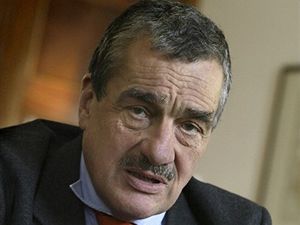
Prague/Tbilisi- Czech Foreign Minister Karel Schwarzenberg, who has cut his holiday short over the conflict in Georgia, today said Prague supports Georgia where by a sad coincidence fights broke out shortly before the 40th anniversary of the Soviet-Russian led invasion of Czechoslovakia, by the "Warsw Pact" Troops in August, 1968.

She told CTK that Schwarzenberg, who is returning to the office now instead of August 18, as originally planned, is in contact with his Georgian counterpart Eka Tkeshelashvili and also with Bernard Kouchner, the foreign minister of France that presides over the EU now.

Czech Ambassador in Tbilisi Ivan Jestrab today said that some 30 Czechs have left Georgia along with a convoy bound for the Armenian capital Jerevan, from where most of them are to leave by a Polish plane for Warsaw later today.

Further Czechs will leave Armenia in the same way on Monday, Jestrab told CTK.

Another four Czechs, who find themselves in western Georgia and cannot use their air-tickets to depart from Batumi by plane, will go to Istanbul by car. The Czech consulate in Istanbul will help them reach the Czech Republic, Jestrab said.

About 15 other Czechs want to remain in Georgia. The embassy knows their identity, their whereabouts and it has connection with them.

Another 15 Czechs, however, reportedly stay in Georgia's mountainous areas, according to the embassy's unconfirmed information. The embassy does not know their names nor is it in contact with them. Nevertheless, according to available information, all Czechs in Georgia are in order, unharmed and face no problems, Jestrab said.

He said the situation in Tbilisi is calm, but local residents are naturally nervous.

The Czech carrier CSA's regular flights from Prague to Tbilisi and vice versa on Saturday was cancelled over the security situation in Georgia.

Another CSA plane is to depart for Tbilisi on August 12. "It will depend on the general situation whether the flight will depart," CSA spokeswoman Daniela Hupakova told CTK.

On Friday, the Georgian military used force to gain control of the country's separatist and pro-Russian province South Ossetia. It met with armed resistance of the Russian military that sent in troops to reinforce the Russian members of the South Ossetian peace corps.

Thousands of victims have been reported by various sources from the South Ossetian centre of Tskhinvali.


26 June, 2008

Soviet invasion of 1968 to have its own web page

Prague - A comprehensive list of documents related to the August 1968´s invasion of Czechoslovakia by Warsaw Pact troops is presented on a new web page run by the Totalitarian Regime Study Institute.
Besides various secret analyses and testimonies, the web page also offers previously unpublished radio transmissions and a list of 108 victims - people who died between August 21 until the end of 1968 and their death was related to the presence of the Warsaw Pact troops in Czechoslovakia.

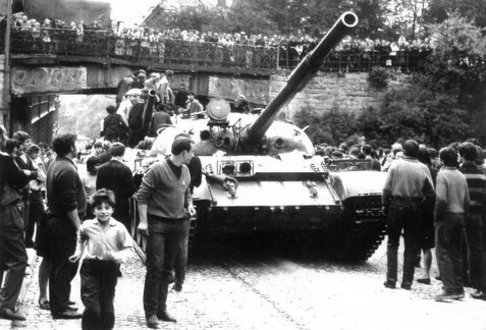
This list includes basic biographic data, often accompanied with a photo of the victim. Some of them were shot, others were run over by Soviet tanks.

Twenty-two year old Eduard Netušil died in a road accident. The young man was trying to take over a badly lit military transporter that suddenly reversed, forcing the young man to drive his motorbike into a tree.

Or, sixty-three years old Josef Bulík who died when a tank crushed a newspaper stand he happened to be in.

The original records of the radio broadcast programs of August 1968 have been long lost in archives - now they are all disclosed online.

They include radio news or speeches of major political figures.

"These are ten freest days in the history of Czechoslovak radio," said Totalitarian Regime Study Institute head Pavel Žáček.

Prague Spring

The territory of what was Communist Czechoslovakia then was invaded by five Warsaw Pact member states - Soviet Union, Bulgaria, Hungary, German Democratic Republic and Poland - during the night between 20 and 21 August 1968.

The military intervention took place because the Soviet Bloc's leaders were not happy with the liberal reforms initiated by the new Czechoslovak government.

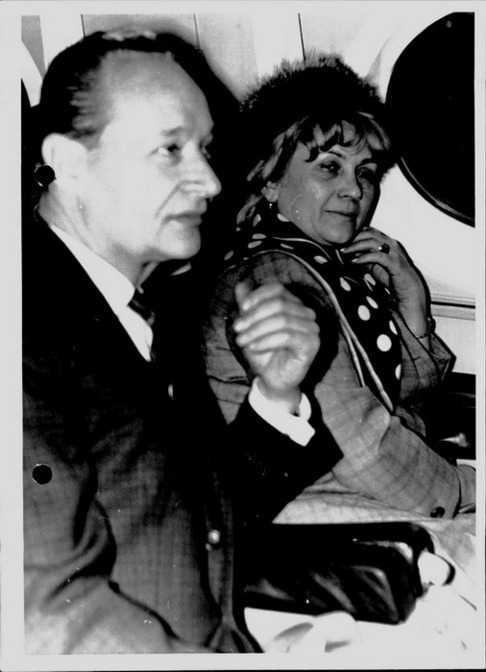
Alexandr Dubček was elected the head of the Czechoslovak Communist Party (KSČ) in January 1968 and has become an iconic figure of the 1968 reform program.

For a short period of time Czechoslovakia broke free from Soviet rule. The new government introduced economic reforms, limiting state controls and allowing freedom of speech. This brief period of about four months is now known as the Prague Spring.

You can see the page here

Karel Kryl, Svoboda a Demokracie, Nezakladnam ! NE !